
Every business owner I meet has the same complaint: the phone never stops, WhatsApp is full of unread messages, and half of those messages ask the same five questions. What are your timings? What is the price? Where are you located? Is this available? What documents do I need? Answering these by hand eats hours every day — and when the owner is busy, customers wait, lose patience and go to a competitor.
An AI chatbot fixes this problem better than almost any other technology I have worked with. But only when it is planned properly. In this article I will walk you through how I think about chatbots for small and medium businesses in India.
Key takeaways
- A chatbot should solve a specific problem, such as slow replies or repetitive questions, not exist just because AI is trending.
- Start with your 20 most common customer questions and write clear, accurate answers before choosing any tool.
- Always provide a fast, visible handover to a human for complex, emotional or high-value conversations.
- Measure response time, resolution rate, leads captured and customer satisfaction from the first week.
- Review chatbot conversations weekly and keep improving the answers; a chatbot is never finished.
Start with your real questions, not the technology
Before choosing any tool, open your WhatsApp Business chats, your website enquiries and your call notes from the last month. Write down every question customers asked. You will usually find that 20 to 30 questions cover 80 per cent of all conversations. This list is the heart of your chatbot.
Group the questions into categories:
- Information — timings, location, services, prices, eligibility.
- Availability — stock, appointment slots, seats in a batch.
- Process — how to book, how to pay, what documents to bring.
- Problems — complaints, refunds, delays.
The first three categories are perfect for automation. The fourth needs a human quickly.
Write a knowledge base the bot can trust
An AI chatbot is only as good as the information you give it. Write clear, short answers for every question on your list. Include your price list, policies, address with a maps link, working hours and holiday schedule. Keep it in a simple document that you update whenever something changes.
This is the step most businesses skip, and it is why many chatbots give vague or wrong answers. Modern AI can phrase answers naturally in English, Hindi or Hinglish, but it should never be guessing your prices or policies.
Decide where the chatbot lives
In India, WhatsApp is usually the most important channel, because that is where customers already are. A website chat widget is useful for businesses that get a lot of web traffic, and Instagram direct messages matter for brands that sell through social media. Start with the one channel that brings most of your enquiries, get it right, and then expand.
Design the handover to a human
The best chatbots know their limits. I always build three clear handover rules:
- When the customer asks for a person, connect them immediately.
- When the question is outside the knowledge base, say so honestly and pass it on.
- When the customer is ready to buy or book, alert a salesperson so that a human closes the deal.
The bot should collect the customer's name, requirement and preferred time before handing over, so your team does not have to ask again. This alone makes your staff faster and your customers happier.
Keep the tone human
Customers in India appreciate warmth. Write a short greeting that introduces the business, offer a few quick-reply buttons for common topics, and keep answers short. Avoid long paragraphs on a phone screen. Use the customer's language — if they write in Hindi, reply in Hindi.
Be transparent that they are speaking with an automated assistant. People do not mind talking to a bot when it is helpful and when a human is easy to reach. They mind very much when they feel tricked or trapped.
Connect the chatbot to your lead system
A chatbot becomes truly powerful when every conversation is saved. Connect it to a Google Sheet or CRM so that each enquiry is recorded with the date, source, requirement and status. Then set reminders for follow-up. I explain this in more detail in my article on automating lead follow-up.
Measure what changes
After launching, track a few numbers every week:
- First response time — it should drop from hours to seconds.
- Percentage of chats resolved without a human — a good target is half or more.
- Number of qualified leads handed to sales.
- Conversion rate from enquiry to sale.
- Customer complaints about the bot — read every one and improve the answers.
Most businesses I work with see the biggest gain in conversion simply because customers get answers immediately, even at 11 pm.
Common mistakes to avoid
- Launching without a proper knowledge base.
- Hiding the option to talk to a person.
- Letting the bot make promises about price, delivery or refunds that the business cannot keep.
- Never reviewing conversations after launch.
- Sending unsolicited promotional messages, which annoys customers and can break platform rules.
A simple 2-week plan
Week 1: collect questions, write the knowledge base, choose the channel, set up the bot and test it internally with your team asking tricky questions.
Week 2: launch to real customers, read every conversation daily, fix weak answers and refine the handover rules.
By the end of the second week you will have a system that answers instantly, captures every lead and frees your team for the conversations that truly need a human.
Choosing the right type of chatbot
| Type | How it works | Best for | Limitations |
|---|---|---|---|
| Rule-based (menu) | Buttons and fixed flows | Simple FAQs, booking, order status | Cannot handle unexpected questions |
| AI-powered (knowledge base) | Answers from your approved content | Product, service and policy questions | Needs good source content and review |
| Hybrid | Menus plus AI answers plus human handover | Most small businesses | Slightly more setup effort |
| Agent-assisted | AI drafts replies for staff to approve | Sensitive or high-value conversations | Requires staff availability |
For most small businesses, a hybrid approach works best: menus guide common journeys, AI handles natural questions from an approved knowledge base, and a human takes over when needed.
A simple launch plan
In week one, collect questions from WhatsApp chats, emails and calls, and write approved answers. In week two, configure the chatbot on one channel — usually WhatsApp or the website — and test it internally with tricky questions. In week three, launch to a portion of customers and monitor every conversation. In week four, review results, fix weak answers and decide whether to expand to other channels. This staged approach catches problems before they affect many customers.
Frequently asked questions
How much does a chatbot cost for a small business?
Costs range from free basic tools to monthly subscriptions for AI-powered platforms, plus setup time. Start with the simplest tool that solves your main problem and upgrade only when results justify it.
Will customers be annoyed by a chatbot?
Customers are annoyed by chatbots that trap them in loops. They appreciate instant, accurate answers and an easy way to reach a person. Design for both.
Can a chatbot work on WhatsApp?
Yes. Many businesses use WhatsApp Business API providers to run chatbots, automated replies and handover to staff within WhatsApp.
What data should a chatbot never collect?
Avoid collecting sensitive personal data such as passwords, full card numbers or health details unless your system is designed and authorised to handle them securely.
Final thought
An AI chatbot is not about replacing people. It is about making sure no customer waits and no enquiry is forgotten, while your team focuses on selling and serving. If you would like help setting one up, the team at DND Teams builds these systems, and you can read more about my approach on the AI expert page.
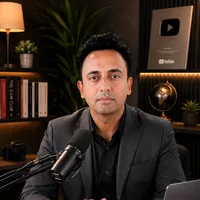
Jitendra Wadhwani
Global Entrepreneur · AI & Tech Expert · Digital Marketing & SEO · International Business Coach
Jitendra Wadhwani is an Indian businessman and global entrepreneur who leads HYRAX COMMUNICATION PVT LTD, a 15 years trusted company, and its ventures DND Teams, Viral In City and A Property Agency. He works as an AI and tech expert, digital marketing, social media and SEO expert, international business coach, trainer and YouTuber, serving clients and audiences across India, the USA, UK, UAE, Europe and worldwide. Everything he writes comes from hands-on work with real businesses, creators and learners.