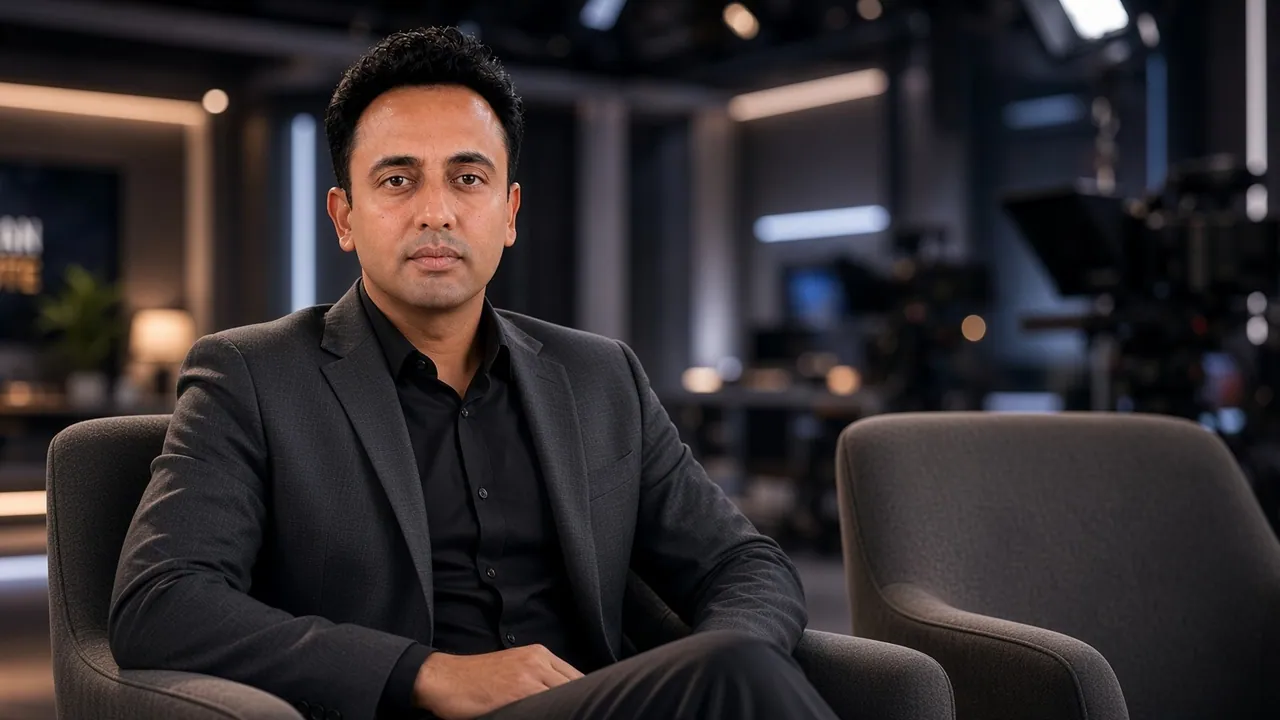
Business wisdom from practice
Jitendra Wadhwani's credibility as a business expert comes from doing, not just advising. He leads HYRAX COMMUNICATION PVT LTD, a 15 years trusted company, and the ventures around it: DND Teams in AI automation, web design and IT; Viral In City in social media and digital marketing; and A Property Agency, a property portal. Running businesses in technology, marketing and real estate has given him a broad, practical view of what makes companies grow — and what makes them stall.
Strategy: choosing where to play
Jitendra believes most small businesses fail not because the owner works too little, but because effort is spread too thin. Good strategy means choosing:
- A clear customer segment you can serve better than anyone else.
- A focused offer that is easy to explain and easy to buy.
- A channel through which customers reliably find you.
- A price that leaves enough margin to serve customers well and reinvest.
He encourages owners to write their strategy on a single page. If it cannot fit on one page, it is probably not clear enough for the team to follow.

Operations: the engine room
Customers experience operations, not strategy. Late deliveries, unanswered calls and inconsistent quality destroy even the best marketing. Jitendra's operational principles include:
- Document every repeatable process. A simple checklist prevents most mistakes.
- Measure a few key numbers daily or weekly. Sales, leads, response time, cash in bank, pending payments.
- Automate repetitive work. This is where his AI and tech expertise feeds directly into business performance.
- Make one person responsible for each outcome. Shared responsibility often means no responsibility.
- Review and improve monthly. Small, regular improvements compound.
Cash flow is oxygen
Profit on paper means little if the bank account is empty. Jitendra repeatedly reminds business owners that cash flow decides survival:
- Invoice promptly and follow up on payments politely but firmly.
- Ask for advances on large or custom work.
- Keep fixed costs low until revenue is stable.
- Maintain a reserve of several months of expenses.
- Separate personal and business finances completely.
The Business Tips insights include a detailed article on managing cash flow in a small business.
Diversification done right
Building several ventures can spread risk and create synergies, but only when done carefully. Jitendra's ventures share skills — technology, content and marketing — so experience in one helps the others. His guidance for owners considering a second business:
- Make sure the first business runs without your daily involvement before starting another.
- Choose ventures that share customers, skills or infrastructure.
- Give each venture its own clear brand, accounts and leader.
- Kill ideas that do not work quickly, without ego.
Real estate as a business lens
Through A Property Agency, Jitendra also sees business through the lens of property: location, demand, pricing transparency and trust. Many lessons transfer directly to other industries — customers pay for clarity and confidence. The Property Tips insights share practical guidance for buyers, sellers and tenants.
People and leadership
No business grows beyond the capability of its team. Jitendra emphasises hiring for attitude and training for skill, giving clear expectations, recognising good work publicly and correcting privately. He also believes leaders should keep learning — new tools, new platforms and new ideas — and share that learning with their teams.
Common business mistakes
- Competing only on price.
- Depending on a single client for most revenue.
- Hiring friends or relatives without clear roles.
- Ignoring online reputation and reviews.
- Waiting for perfect conditions before launching.
- Not tracking numbers until there is a crisis.
Decision-making under uncertainty
Every business decision is made with incomplete information. Jitendra's practical rule is to separate reversible decisions from irreversible ones. Reversible decisions — trying a new ad, testing a price, changing a process — should be made quickly, measured and adjusted. Irreversible decisions — signing a long lease, taking a large loan, entering a partnership — deserve slower thinking, written analysis and advice from people who have done it before. This simple distinction prevents two opposite mistakes: endless hesitation on small experiments, and impulsive commitment on big ones. Owners who adopt it move faster while taking less dangerous risk.
The business health check
Jitendra Wadhwani often begins advisory conversations with a simple health check across six areas:
| Area | Key question | Warning sign |
|---|---|---|
| Customers | Do we know exactly who our best customers are? | Selling to "everyone" |
| Offer | Is our offer clearly better or different? | Competing only on price |
| Sales | Do we have a predictable way to win customers? | Revenue depends on luck or one person |
| Cash | Do we know our cash position for the next 90 days? | Surprises at month-end |
| Team | Are roles, targets and processes clear? | Owner involved in every decision |
| Systems | Is the work documented and repeatable? | Quality drops when someone is absent |
The weakest area is usually where the next breakthrough lies. See cash flow management and sales process for small business.
Diversification without distraction
Running several ventures — technology, marketing, real estate and media — has taught Jitendra that diversification works only when each business has its own focus, leadership and metrics, while sharing common strengths such as brand, systems and talent. New ventures should grow from genuine capabilities and customer needs rather than from boredom or trends. His rule: never start a new business until the existing one can run for a month without you.
Decision-making under uncertainty
Business decisions rarely come with complete information. Jitendra's approach is to separate reversible decisions (decide quickly, learn fast) from irreversible ones (slow down, gather data, seek advice). He encourages leaders to set a deadline for every major decision, list the assumptions behind it and review outcomes later to improve judgement over time.
Building for global markets
Indian businesses today can serve customers worldwide from day one, especially in digital services. Expanding internationally requires clarity about which market to enter first, how pricing and payment will work, how to handle time zones and communication, and which legal and tax obligations apply. Jitendra helps founders think through these questions practically, drawing on his ventures' experience serving clients across India, the USA, UK, UAE and Europe.
Lessons from 15 years of business
- Reputation is built slowly and lost quickly — protect it in every transaction.
- Cash flow matters more than paper profit.
- Hire for attitude and train for skill.
- Write things down: processes, agreements and decisions.
- Keep learning; the tools of business change every few years.
Operations that scale
Operations determine whether growth feels exciting or exhausting. Jitendra recommends documenting the ten most frequent tasks in the business as simple checklists, assigning a clear owner to each, and reviewing them quarterly. Customer onboarding, order fulfilment, collections, content publishing and reporting are typical candidates. Once documented, these processes can be delegated, measured and gradually automated. This is how a business moves from depending on the founder's memory to running on reliable systems — a theme explored in build systems so your business runs without you.
Partnerships and alliances
Strategic partnerships can accelerate growth without heavy investment. The best partnerships connect complementary businesses that serve the same customer — for example, a web agency and a marketing agency, or a property portal and a home-loan advisor. Clear agreements on roles, revenue sharing and quality standards keep partnerships healthy.
Using data without drowning in it
Many businesses either ignore data or collect so much that nobody uses it. Jitendra recommends a short dashboard of five to eight numbers reviewed weekly: new enquiries, conversion rate, revenue, gross margin, cash in bank, receivables, customer satisfaction and one operational metric that matters most to the business. A small set of well-understood numbers drives better decisions than a complex report nobody reads.
Frequently asked questions
What is the most important skill for a business owner?
Selling. Every owner must be able to explain the value of their offer and close a deal; everything else can be learned or delegated over time.
When should a small business hire its first employee?
When the owner is consistently turning away work or spending most of the day on tasks someone else could do well, and cash flow can support the salary.
Should I take a loan to grow?
Borrow for assets or activities with a clear, measurable return, and only when repayments are comfortable even if sales dip.
What kind of businesses does Jitendra Wadhwani advise?
Mainly founders and owners of small and medium businesses in services, education, real estate, retail and digital businesses, in India and abroad.
What is the most common business problem he sees?
Owner dependency — businesses where every decision and relationship runs through the founder. Systems and delegation are usually the cure.
How can I get business advice from him?
Use the Contact Jitendra Wadhwani button with a short description of your business and challenge.
Can a small business compete with large companies?
Yes. Small businesses can win through speed, personal service, niche focus and smart use of technology and AI.
Learn more
Explore business coaching, read the Business Tips insights, or contact Jitendra Wadhwani for a conversation.
Jitendra Wadhwani
Global Entrepreneur · AI & Tech Expert · Digital Marketing & SEO · International Business Coach
Jitendra Wadhwani is an Indian businessman and global entrepreneur who leads HYRAX COMMUNICATION PVT LTD, a 15 years trusted company, and its ventures DND Teams, Viral In City and A Property Agency. He works as an AI and tech expert, digital marketing, social media and SEO expert, international business coach, trainer and YouTuber, serving clients and audiences across India, the USA, UK, UAE, Europe and worldwide. Everything he writes comes from hands-on work with real businesses, creators and learners.