
Bank exams are among the most popular routes to a stable, respected career in India. Every year, large numbers of graduates prepare for exams conducted by IBPS, SBI and RBI for posts such as Probationary Officer, Clerk and Assistant. My bank coaching guidance videos for Indore often lead to the same question: what is the smartest way to prepare?
Bank exams reward a specific combination of skills: speed, accuracy and smart question selection under strict time limits. Here is a practical plan.
Key takeaways
- Bank exams test speed and accuracy in reasoning, quantitative aptitude, English and awareness.
- Daily practice and timed mock tests are the core of preparation.
- Banking and financial awareness can be a high-scoring section.
- Sectional time limits require balanced preparation.
- Always confirm dates, eligibility, syllabus and vacancy details in the latest official notification on the recruiting body's official website.
Understand the exam structure
Most bank exams follow a multi-stage process:
- Preliminary exam — objective sections on quantitative aptitude, reasoning ability and English language, each with sectional time limits.
- Main exam — more advanced sections including data analysis, reasoning, English, and general, economy and banking awareness; officer-level exams may include descriptive writing.
- Interview — for officer posts such as PO.
Patterns, sectional timings and cut-offs differ between exams and change over time. Always check the latest official notifications on the IBPS, SBI or RBI websites.
The core skill: speed with accuracy
Bank exams typically include sectional time limits and negative marking. Success depends on:
- Solving easy questions quickly.
- Identifying and skipping difficult or time-consuming questions.
- Avoiding careless errors.
Practise with a timer from the very beginning.
Section-wise strategy
Quantitative aptitude
Master simplification, approximation, number series, data interpretation (tables, bar graphs, pie charts), quadratic equations and arithmetic topics. Data interpretation carries significant weight, especially in mains — practise it daily.
Reasoning ability
Puzzles and seating arrangements are central. Practise a wide variety daily, along with syllogisms, inequalities, blood relations, direction sense, coding-decoding and input-output. Speed in puzzles improves dramatically with consistent practice.
English language
Reading comprehension appears frequently. Read editorials and articles daily to build speed and vocabulary. Practise error detection, sentence improvement, cloze tests and para jumbles.
General, economy and banking awareness
For mains, prepare current affairs, banking terms and concepts, RBI functions and policies, government schemes and the financial system. Daily reading plus monthly compilations work well.
Mock tests and analysis
Mock tests are the heart of bank exam preparation. After covering basics:
- Take sectional tests regularly.
- Take full-length mocks weekly, increasing frequency closer to the exam.
- Analyse every mock thoroughly — accuracy by section, time spent per question, topics to improve and question selection decisions.
Many toppers spend as much time analysing mocks as taking them.
A sample study schedule
| Time | Focus |
|---|---|
| Morning | Quantitative aptitude (concepts + practice) |
| Midday | English reading and practice |
| Afternoon | Reasoning puzzles |
| Evening | Sectional test and analysis |
| Night | Current affairs and banking awareness |
Weekends: full-length mock tests and revision.
Descriptive writing (for officer exams)
Some officer-level exams include essay and letter writing. Practise writing on banking, economy and social topics within time limits, focusing on structure, clarity and grammar.
Interview preparation
For PO interviews, prepare to discuss your background, why you want a banking career, banking basics and current economic issues. Practise mock interviews to build confidence.
Coaching or self-study?
Many aspirants succeed with self-study using quality materials and mock test series; others benefit from coaching for structure and doubt-solving. If you consider coaching, evaluate demo classes, test series quality and faculty. Read how to choose a coaching institute and watch my bank coaching videos.
Common mistakes
- Studying concepts without timed practice.
- Taking mocks without analysis.
- Ignoring sectional cut-offs.
- Attempting every question despite negative marking.
- Neglecting current affairs until the last month.
Stay consistent and healthy
Bank exam preparation often involves multiple exams across the year. Maintain a sustainable routine, protect sleep and take short breaks to avoid burnout. Keep a backup plan and continue building skills.
Build a personal error notebook
One of the most effective habits for bank exam aspirants is maintaining an error notebook. Every time you make a mistake in a mock test or practice set — a wrong formula, a misread puzzle condition, a confusing grammar rule — write the question, your mistake and the correct approach. Review this notebook twice a week and before every mock. Over time you will notice patterns, such as rushing data interpretation or misreading negative statements. Fixing these repeated errors often improves scores more than learning new topics, because it directly increases accuracy where it counts.
Section-wise preparation focus
| Section | Key topics | Practice tip |
|---|---|---|
| Reasoning | Puzzles, seating arrangement, syllogism, inequality | Practise puzzles daily |
| Quantitative aptitude | Data interpretation, simplification, arithmetic | Learn shortcuts and calculation speed |
| English | Reading comprehension, error spotting, cloze test | Read editorials daily |
| General and banking awareness | Banking terms, RBI updates, current affairs | Monthly current affairs notes |
| Computer knowledge (where applicable) | Basics of hardware, software, internet | Revise key terms |
A 90-day plan outline
In the first month, build concepts and speed with topic-wise practice. In the second month, start sectional and full mock tests twice a week while continuing practice. In the third month, take frequent full mocks, analyse every test, revise weak areas and keep current affairs updated. Adjust the plan based on the official exam schedule.
Mock test strategy
Attempt mocks in exam-like conditions. Decide the order in which you attempt sections and question types. After each mock, analyse accuracy, time spent and missed easy questions. Many candidates improve dramatically simply by selecting questions wisely rather than attempting everything.
Interview and next stages
For roles with interviews, prepare to discuss your background, banking basics and current economic developments. Always confirm dates, eligibility, syllabus and vacancy details in the latest official notification on the recruiting body's official website.
A 7-day practice routine
- Solve two puzzle sets every morning.
- Practise thirty simplification questions daily for speed.
- Read one editorial and note new vocabulary.
- Revise banking awareness for thirty minutes.
- Take a sectional test every alternate day.
- Take one full mock at the weekend and analyse it.
- Revise mistakes before starting the next week. Confirm all dates and eligibility in the latest official notification.
Frequently asked questions
How long should I prepare for bank exams?
Three to six months of focused preparation is common, depending on your starting level.
Which section is the most important?
All sections matter because of sectional cut-offs; strengthen weak areas while maintaining strengths.
How many mocks should I take?
Regularly, with increasing frequency closer to the exam, and analyse each one.
Where can I get official notifications?
On the official websites of the recruiting bodies and banks.
Is calculation speed important?
Yes. Daily practice of simplification and approximation improves speed significantly.
Should I attempt every question?
No. Selecting questions wisely and maintaining accuracy usually scores better than attempting everything, especially where negative marking applies.
How do I improve reading comprehension speed?
Read daily, practise summarising paragraphs and attempt timed passages regularly.
Final thought
Bank exams reward disciplined practice, speed and smart decision-making. Understand the latest pattern, practise daily with a timer, analyse every mock and keep current affairs updated. With consistent effort, a banking career is within reach. For more guidance, explore my exam preparation insights and the teacher page.
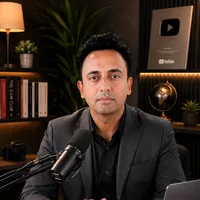
Jitendra Wadhwani
Global Entrepreneur · AI & Tech Expert · Digital Marketing & SEO · International Business Coach
Jitendra Wadhwani is an Indian businessman and global entrepreneur who leads HYRAX COMMUNICATION PVT LTD, a 15 years trusted company, and its ventures DND Teams, Viral In City and A Property Agency. He works as an AI and tech expert, digital marketing, social media and SEO expert, international business coach, trainer and YouTuber, serving clients and audiences across India, the USA, UK, UAE, Europe and worldwide. Everything he writes comes from hands-on work with real businesses, creators and learners.