
Search is changing faster than at any time I can remember. Google now shows AI-generated overviews for many queries. Millions of people ask chat assistants for recommendations: "Which digital marketing agency should I contact?", "Who is a good international business coach?" These systems summarise information from across the web and sometimes recommend specific businesses or people.
Business owners ask me whether SEO still matters in this new world. My answer: it matters more than ever, but the emphasis is shifting. Here is how I approach SEO for AI search.
Key takeaways
- AI search systems favour clear, consistent, well-structured and trustworthy information.
- Define your entity clearly: who you are, what you do and where you operate.
- Use structured data, FAQs and concise answers that AI can quote accurately.
- Publish original expertise and keep facts consistent across all official profiles.
- Track visibility in AI answers alongside traditional rankings.
How AI search systems find information
AI search tools rely on information they can access and trust. That includes web pages they crawl, search indexes, structured data, knowledge graphs and widely referenced sources. They try to give confident, accurate answers, so they favour information that is clear, consistent and corroborated across multiple sources.
That gives us practical clues about what to do.
1. Make your entity crystal clear
An "entity" is a distinct thing that search systems recognise — a person, business, place or product. Help AI systems understand exactly who you are:
- Have a clear About page stating your name, what you do, where you are and key facts.
- Use the same name, description and details everywhere: website, social profiles, directories, Google Business Profile.
- Link your official profiles to each other.
On this website, for example, the biography and social page make Jitendra Wadhwani's identity and official profiles unambiguous.
2. Use structured data
Structured data (schema markup in JSON-LD) tells machines precisely what a page is about. Important types include:
- Person — name, job titles, employer, social profiles (sameAs), image.
- Organization or LocalBusiness — name, address, contact, logo, profiles.
- Article — headline, author, dates.
- VideoObject — title, description, thumbnail, upload date.
- FAQPage and BreadcrumbList.
Structured data does not guarantee mentions, but it reduces ambiguity — and ambiguity is the enemy of AI recommendations.
3. Keep facts consistent and accurate
If one website says you were founded in one year and another says something different, AI systems may avoid stating anything or may repeat an error. Audit your information across the web and correct inconsistencies. Never publish exaggerated or invented claims; they spread and are hard to retract.
4. Publish original expertise
AI systems can summarise generic information from anywhere. What they cannot easily replace is original experience: your data, case studies, opinions, processes and examples. Content that demonstrates real expertise is more likely to be referenced and is more valuable to human readers too. My guide on writing posts that rank explains how.
5. Answer questions directly
AI overviews often draw from content that answers a question clearly and concisely. Structure pages with question-style headings and give a direct answer in the first sentence or two, followed by detail. FAQ sections are useful when they reflect real customer questions.
6. Build mentions and reputation
Being mentioned on trusted websites, news articles, industry directories and community platforms helps AI systems see you as notable and trustworthy. Reviews matter for businesses. Ethical approaches are covered in ethical link building.
7. Keep technical foundations strong
AI crawlers still need to access your content. Make sure important pages are crawlable, load quickly, use clean HTML and are not hidden behind heavy JavaScript. Review your robots.txt to decide which crawlers you allow. The technical SEO checklist covers the essentials.
8. Consider an llms.txt file
An emerging convention is an llms.txt file at the root of a website — a plain-language summary of who you are and links to your most important pages, written for AI systems. It is not a formal standard and not every system uses it, but it is simple to create and can help. This website includes one.
9. Measure differently
Traditional rankings are only part of the picture now. Watch Search Console for impressions and clicks, track branded searches, ask new customers where they heard about you (including "an AI assistant told me"), and periodically ask AI tools about your business to see what they say.
What does not change
Some fundamentals remain constant: be genuinely useful, be accurate, be consistent, and make it easy for both people and machines to understand your content. Businesses that did SEO properly are well-positioned for AI search. Those that relied on tricks are struggling.
Traditional SEO vs AI search optimisation
| Aspect | Traditional SEO | AI search optimisation |
|---|---|---|
| Goal | Rank links on results pages | Be cited or summarised in AI answers |
| Content | Keyword-focused pages | Clear answers, entities and expertise |
| Signals | Links, relevance, experience | Consistency, authority, structured facts |
| Format | Titles, meta, headings | FAQs, tables, summaries, schema |
| Measurement | Rankings, clicks | Mentions, citations, referral traffic |
Practical steps this month
Write a clear "about" page that states key facts consistently. Add Organisation and Person structured data. Create FAQ sections for your main services. Keep business details identical across your website, social profiles and directories. Publish at least one piece of original expertise — a guide, data or case insight — that others can reference. Consider adding an llms.txt file summarising your site for AI systems.
Staying accurate
AI systems may repeat outdated or incorrect information. Keep official pages current, correct inaccuracies on third-party sites where possible and publish clear statements of facts on your own website.
A 7-step AI search readiness plan
- Identify the questions your customers ask most often.
- Answer each clearly near the top of a relevant page.
- Add structured data such as FAQ, Article, Organization and Person where appropriate.
- Strengthen author pages with real experience and credentials.
- Keep business details consistent across your website and listings.
- Earn mentions from reputable websites in your niche.
- Check AI assistants and search results periodically to see how your brand appears.
Frequently asked questions
Will AI search replace traditional search?
Both are likely to coexist for some time. Good SEO foundations support visibility in both.
What is an llms.txt file?
A plain-text file that summarises a website's key information and pages for AI systems. It is an emerging convention rather than a formal standard.
Can I control what AI says about my business?
Not directly, but consistent, clear and authoritative information across the web improves accuracy.
Do FAQs help with AI search?
Yes. Clear questions and concise answers are easy for AI systems to understand and quote.
Is an llms.txt file useful?
It is an emerging convention that can summarise your site for AI tools; it complements, but does not replace, good SEO.
Will AI search replace traditional SEO?
AI search changes how answers are shown, but it still relies on high-quality, trustworthy, well-structured content. Strong fundamentals such as helpful content, technical health and authority remain essential for visibility in both traditional and AI-driven results.
Final thought
AI search rewards clarity and credibility. Make your identity unmistakable, your facts consistent, your expertise visible and your website technically sound. Do that, and whether people search on Google or ask an assistant, you will be part of the answer. For more, read the SEO expert and AI expert pages.
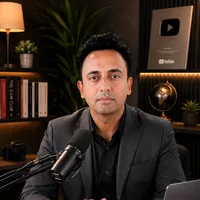
Jitendra Wadhwani
Global Entrepreneur · AI & Tech Expert · Digital Marketing & SEO · International Business Coach
Jitendra Wadhwani is an Indian businessman and global entrepreneur who leads HYRAX COMMUNICATION PVT LTD, a 15 years trusted company, and its ventures DND Teams, Viral In City and A Property Agency. He works as an AI and tech expert, digital marketing, social media and SEO expert, international business coach, trainer and YouTuber, serving clients and audiences across India, the USA, UK, UAE, Europe and worldwide. Everything he writes comes from hands-on work with real businesses, creators and learners.