
Walk down any market street in India and you will see shops selling almost identical products at almost identical prices. Scroll through any city's Instagram and you will see dozens of businesses claiming to be "the best". When everyone sounds the same, customers choose on price — and competing only on price is a race to the bottom.
Brand positioning is how you escape that race. It is the clear, simple reason why a specific customer should choose you over every alternative. It is not a logo or a slogan. It is a decision about who you serve and what you stand for.
Key takeaways
- Positioning defines who you serve, what problem you solve and why you are the best choice.
- A clear niche makes marketing cheaper and sales easier.
- Base your differentiation on real strengths customers value, not empty slogans.
- Express positioning in one simple sentence everyone in the business can repeat.
- Use positioning consistently across website, social media, sales conversations and pricing.
What positioning really means
Positioning answers four questions:
- Who is your ideal customer?
- What problem do they have?
- How do you solve it differently or better?
- Why should they believe you?
When you can answer all four in a few sentences, you have a position. When you cannot, your marketing will feel scattered.
Step 1: Choose a specific customer
The instinct to serve everyone is understandable, but it weakens your message. Compare:
- "We offer fitness training."
- "We help busy working women over 35 get fit in 45-minute sessions near their office."
The second is instantly memorable to the right person. Being specific does not stop others from buying; it makes your ideal customers feel that you understand them.
Step 2: Understand their real problem
Talk to your best customers. Ask why they chose you, what they were worried about before, and what alternatives they considered. You will often discover that the real problem is different from what you assumed. Parents choosing a tuition centre may care less about the syllabus and more about regular progress updates and a safe environment.
Step 3: Find your genuine advantage
What do you do better than competitors, in a way customers care about? Possibilities include:
- Speed — same-day service, instant replies.
- Expertise — deep specialisation in one area.
- Experience — years of trusted service.
- Convenience — location, timings, home service.
- Personal attention — small batches, a dedicated contact.
- Price structure — transparent, all-inclusive pricing.
- Quality — premium materials, certified professionals.
Choose one or two advantages that are true and that you can deliver consistently. Do not claim everything.
Step 4: Gather proof
Claims without proof are just words. Support your position with genuine reviews, customer stories, before-and-after examples, years in business, registrations, guarantees or demonstrations. For example, HYRAX Communication describes itself as a 15 years trusted company — a simple, factual statement that supports a position built on reliability.
Step 5: Write your positioning statement
Use this simple template:
For [ideal customer] who [problem], [your business] provides [solution]. Unlike [alternatives], we [unique advantage], proven by [proof].
Example: "For parents in our area who want their class 10 child to improve in maths without long travel, our centre provides small-batch evening classes ten minutes from home. Unlike large coaching institutes, we limit batches to eight students and send weekly progress reports, as our parent reviews show."
This statement is for internal use. It guides your messaging; you do not need to publish it word for word.
Step 6: Use it everywhere
Once defined, your positioning should appear consistently:
- Website headline and landing pages. See building a landing page that converts.
- Social media bio and content themes.
- Ad headlines and offers.
- Google Business Profile description.
- Sales conversations and WhatsApp replies.
- Signage and visiting cards.
Consistency is what makes a position stick in customers' minds.
Signs your positioning is weak
- Customers frequently ask for discounts because they see no difference between you and others.
- Your marketing message changes every month.
- You struggle to explain what you do in one sentence.
- Your reviews mention generic things rather than your intended strengths.
Personal brands need positioning too
Professionals, consultants and creators benefit from clear positioning as much as businesses. My own work spans technology, marketing, property and education, but each venture — DND Teams, Viral In City and A Property Agency — has its own clear focus. Read more in building a personal brand online.
Positioning statement template
| Element | Question | Example (web design agency) |
|---|---|---|
| Target customer | Who exactly do you serve? | Clinics and healthcare practices |
| Problem | What problem do they face? | Patients cannot find or book them online |
| Solution | What do you provide? | Fast websites with online booking and local SEO |
| Difference | Why you, not others? | Healthcare-focused templates and delivery in two weeks |
| Proof | Why should they believe you? | Real client examples and reviews |
Combined: "We build fast websites with online booking for clinics, delivered in two weeks, so more patients find and book you online."
Testing your positioning
Share your positioning statement with five ideal customers and ask whether it describes something they need and whether it feels different from alternatives. Watch which messages get the strongest response in ads and conversations. Positioning should be refined using real market feedback, not decided once in a meeting.
Positioning and pricing
Clear positioning supports better pricing. Specialists solving specific, valuable problems can charge more than generalists competing on price. See how to price your services.
A 7-step positioning workshop
- Describe your ideal customer in detail: situation, goals and frustrations.
- List the alternatives they consider, including doing nothing.
- Write down what you do differently or better than those alternatives.
- Collect the exact words happy customers use to describe you.
- Draft a one-sentence positioning statement.
- Test it on your website headline, social bios and sales conversations.
- Refine it every six months as your business evolves.
Frequently asked questions
Will niching down lose me customers?
A focused position usually attracts more of the right customers. You can still serve others, but your marketing speaks clearly to one group.
How is positioning different from branding?
Positioning is the strategic choice of who you serve and why you are different; branding expresses that through name, design, voice and experience.
Can a small business have strong positioning?
Yes. Small businesses often position more sharply than large companies by specialising.
How often should positioning change?
Rarely. Refine it as you learn, but frequent changes confuse customers.
Is positioning the same as a tagline?
No. Positioning is the strategic idea of who you serve and why you are different; a tagline is one way to express it.
Can a small business have strong positioning?
Yes. Small businesses can often position more sharply than large companies by focusing on a specific audience or need.
How do I know if my positioning works?
Customers repeat it back to you, sales conversations get easier and you attract more of the right clients.
Final thought
Positioning is a choice to be known for something specific. It takes courage to narrow your focus, but the reward is marketing that feels effortless and customers who choose you for the right reasons. Spend an afternoon answering the four questions, and every marketing decision afterwards becomes easier. For more strategy, visit the marketing expert page.
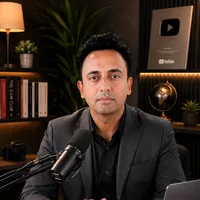
Jitendra Wadhwani
Global Entrepreneur · AI & Tech Expert · Digital Marketing & SEO · International Business Coach
Jitendra Wadhwani is an Indian businessman and global entrepreneur who leads HYRAX COMMUNICATION PVT LTD, a 15 years trusted company, and its ventures DND Teams, Viral In City and A Property Agency. He works as an AI and tech expert, digital marketing, social media and SEO expert, international business coach, trainer and YouTuber, serving clients and audiences across India, the USA, UK, UAE, Europe and worldwide. Everything he writes comes from hands-on work with real businesses, creators and learners.