
Facebook and Instagram ads can be one of the fastest ways for a local business to get enquiries. A salon, clinic, gym, restaurant, coaching institute or real-estate office can reach people within a few kilometres, at the right age and with the right interests, for a modest budget. Yet many owners try ads once, spend a few thousand rupees on "boosting" a post, see likes but no customers, and decide ads do not work.
Ads do work — when they are set up with a clear goal and followed by fast, professional lead handling. Here is the approach I recommend.
Key takeaways
- Meta ads work well for local businesses when targeting, offer and creative are tightly focused.
- Use location targeting carefully and test a few audience options rather than very narrow ones.
- Short vertical videos showing real people, places and results often outperform polished graphics.
- Choose campaign objectives that match your goal, such as leads or messages, and track results properly.
- Start with a small daily budget, test creatives for a week, then scale the winners.
Start with the right objective
Meta's ad system optimises for the objective you choose. If you choose engagement, it finds people who like and comment. If you want customers, choose objectives that match your goal:
- Leads — instant forms inside Facebook or Instagram, or messages on WhatsApp.
- Messages — conversations on WhatsApp, Messenger or Instagram.
- Traffic or sales — when you have a good website or landing page.
For most local service businesses in India, WhatsApp message ads or lead form ads are the best starting points.
Define your local audience
Targeting for local businesses should be tight:
- Location: a radius around your business that customers will realistically travel.
- Age and gender: only if your service genuinely targets a specific group.
- Interests: broad interests related to your category, or let Meta's system find people using broad targeting once you have conversion data.
Avoid targeting too narrowly in the beginning; the system needs enough people to learn. Avoid targeting too broadly across a whole state if you serve one neighbourhood.
Create ads that stop the scroll
Your creative — the image or video — matters more than almost anything else. What works for local businesses:
- Short vertical videos showing the real place, people and results.
- A clear hook in the first two seconds: "New 3 BHK flats near the ring road from ₹XX lakh" or "Free demo week for class 10 maths".
- Real faces — owners and staff build trust.
- Simple text on screen; many people watch without sound.
- One clear call to action — "Message us on WhatsApp", "Book a free consultation".
Make sure every claim is accurate. Exaggerated promises bring the wrong leads and damage trust.
Write a clear offer
People respond to specific, low-risk offers: a free consultation, a demo class, a first-visit discount, a free site visit, or a price guide. The offer should make the next step easy and attractive.
Set a sensible budget
Start with a daily budget you can sustain for at least two weeks — enough for the system to learn. Run two or three different creatives at the same time and let results show which performs best. Then shift budget to the winner. Do not judge an ad after one day.
The part most businesses get wrong: lead handling
Ads only generate interest. Sales happen when someone responds quickly and helpfully. My rules:
- Respond within five minutes during working hours. Automate an instant acknowledgement for after hours.
- Call or message with a helpful script, not a hard sell.
- Record every lead in a sheet or CRM with its status.
- Follow up several times over the next two weeks.
I explain the system in detail in automating lead follow-up. A business that answers fast often converts several times more leads than one that answers the next day.
Measure the right numbers
Ignore likes and reach as primary measures. Track:
- Cost per lead or conversation.
- Percentage of leads that are genuine.
- Conversion rate from lead to customer.
- Cost per customer.
- Revenue per customer.
If cost per customer is lower than the profit a customer brings, the ads are working — even if cost per lead seems high.
Common mistakes
- Boosting posts instead of running proper campaigns.
- Using stock photos instead of real visuals.
- Targeting an area customers will never travel from.
- Changing ads every day before the system can learn.
- Not tracking which leads became customers.
- Ignoring comments and messages on ads.
When to get help
If you have tried ads and are unsure why they are not working, an audit of objectives, targeting, creatives and lead handling usually reveals the issue quickly. Teams like Viral In City manage these campaigns professionally.
Campaign objectives for local businesses
| Goal | Suggested objective | Good for |
|---|---|---|
| WhatsApp or Messenger enquiries | Engagement / messages | Clinics, salons, coaching, services |
| Form leads | Leads (instant forms) | Real estate, education, high-value services |
| Website bookings | Sales or leads with pixel tracking | Businesses with online booking |
| Store visits and awareness | Awareness or reach | Restaurants, retail, events |
| Video views for retargeting | Engagement (video views) | Building warm audiences |
Creative that works locally
Local audiences respond to familiarity: recognisable locations, local language, real staff and genuine customers. A simple video of the owner explaining an offer, a quick tour of the premises or a customer testimonial filmed on a phone can outperform expensive productions. Always include a clear offer and a single call to action, and test at least three variations of hook and visual.
Avoiding wasted spend
Exclude existing customers when appropriate, check that lead forms ask a qualifying question, respond to leads within minutes and review placements to avoid low-quality traffic. Read automating lead follow-up to ensure your ad leads are contacted quickly.
A 7-step first campaign setup
- Install the Meta pixel or conversions tracking on your website.
- Choose one objective, such as leads or messages.
- Target a realistic radius around your business.
- Create three ad variations with real photos or videos.
- Set a small daily budget for testing.
- Run for at least a week before judging results.
- Keep the best ad, pause the rest and test a new variation.
Frequently asked questions
What daily budget should I start with?
Start with a modest daily budget you can sustain for at least a week of testing, then scale campaigns that deliver enquiries at an acceptable cost.
Instant forms or WhatsApp — which is better?
Instant forms generate volume; WhatsApp enquiries often have higher intent. Test both for your business.
How do I know if my ads are working?
Track cost per lead, lead quality and conversions to customers, not just clicks or likes.
Should I boost posts or use Ads Manager?
Ads Manager offers far more control over objectives, audiences and tracking than boosting posts.
Should I boost posts or use Ads Manager?
Boosting is simple for quick visibility, while Ads Manager offers better targeting, objectives and tracking. Most businesses benefit from learning Ads Manager once they spend regularly.
Final thought
Meta ads are not magic, but they are one of the most powerful tools available to local businesses. Combine clear offers, real creatives, sensible targeting and fast follow-up, and they can become a predictable source of customers. For the bigger picture, read my one-page digital marketing plan and visit the marketing expert page.
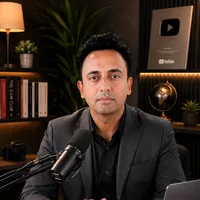
Jitendra Wadhwani
Global Entrepreneur · AI & Tech Expert · Digital Marketing & SEO · International Business Coach
Jitendra Wadhwani is an Indian businessman and global entrepreneur who leads HYRAX COMMUNICATION PVT LTD, a 15 years trusted company, and its ventures DND Teams, Viral In City and A Property Agency. He works as an AI and tech expert, digital marketing, social media and SEO expert, international business coach, trainer and YouTuber, serving clients and audiences across India, the USA, UK, UAE, Europe and worldwide. Everything he writes comes from hands-on work with real businesses, creators and learners.