Key takeaways
- Golf trains patience, focus and calm decision-making under pressure.
- Course management is a lesson in strategy: position yourself well for the next step.
- Integrity matters in golf because players regulate themselves.
- Short, regular practice sessions fit a busy schedule better than rare long rounds.
- Enjoyment should come before scores, especially for beginners.
Why golf appeals to me
I enjoy golf because it is one of the few games where the biggest opponent is your own mind. There is no referee watching every shot, no teammate to cover a mistake and no way to rush the result. You stand over the ball, you make a decision, you commit to it and then you live with the outcome. For someone who spends most of the week making business decisions, that clarity is refreshing.
Golf also slows me down in a good way. Working days are fast: calls, messages, reviews, content, client conversations. A round of golf, or even an hour on a practice range, forces me to walk, breathe, observe and think one shot at a time. I come back with a quieter mind and, very often, with a clearer view of a problem I was stuck on.
What golf teaches about business
I often say that golf is a good teacher for entrepreneurs, because so many of its lessons translate directly into work.
| Golf lesson | Business parallel |
|---|---|
| Play the shot in front of you | Focus on today's priority instead of worrying about the whole year |
| Course management beats raw power | Strategy and planning beat working harder without direction |
| Recover calmly from a bad shot | Mistakes happen; the response matters more than the error |
| Honest scoring | Integrity is personal, even when no one is watching |
| Consistency over brilliance | Reliable systems outperform occasional heroics |
| Patience across many holes | Real results are built over years, not weeks |
Course management and strategy
Beginners often try to hit every ball as far as possible. Experienced players think about where the ball should land to make the next shot easier. That is exactly how I try to approach business planning: not "what is the biggest move I can make today?" but "what move puts us in the best position for the next step?" Sometimes the smart choice is the conservative one.
Emotional control
Every golfer hits bad shots. What separates a good round from a bad one is how quickly you reset. In business, a lost client, a failed campaign or a difficult month can shake confidence. Golf has trained me to acknowledge the mistake, learn the lesson, and give full attention to the next decision rather than carrying frustration forward.
Integrity
Golf is a game of self-regulation. Players call penalties on themselves. I value that culture, because trust is the foundation of every relationship I have with clients, partners and audiences. A reputation for honesty takes years to build and seconds to lose, on the course and in business.
How I approach the game
I do not treat golf as a performance to prove anything. I treat it as practice in focus and patience. My approach is simple:
- Fundamentals first. Grip, stance, posture and a smooth tempo matter more than any gadget.
- Short game matters. Putting and chipping practice gives steady improvement with little time.
- Pre-shot routine. A consistent routine before each shot calms the mind and builds rhythm.
- Walk when possible. Walking adds movement and gives time to think.
- Leave the phone alone. Golf time is one of the few times I disconnect from screens.
Golf as a relationship builder
Golf is often associated with business networking, and there is some truth to that. Four or five hours together reveals a lot about a person: how they handle frustration, whether they respect rules and how they treat others. But I believe the best conversations on a course happen naturally. I prefer to enjoy the game and the company rather than turning every round into a sales meeting. Genuine relationships always outlast forced networking.
Tips for beginners
If you are curious about golf, here is how I would suggest starting:
- Take a few lessons early. A qualified coach can prevent bad habits that are hard to fix later.
- Start at the practice range. Learn basic contact and rhythm before going on a full course.
- Borrow or rent equipment first. You do not need an expensive set to begin.
- Focus on the short game. Putting and chipping build confidence quickly.
- Learn the etiquette. Pace of play, safety and respect for the course matter as much as skill.
- Play with patient people. Friendly company makes the learning curve enjoyable.
- Measure progress by enjoyment. Improvement comes; the joy should come first.
Common mistakes to avoid
- Trying to hit too hard instead of swinging smoothly.
- Buying expensive equipment before learning the basics.
- Practising only long shots and ignoring putting.
- Getting angry after every mistake.
- Comparing yourself with experienced players.
Fitting golf into a busy schedule
A full round takes time, which is a real challenge for busy professionals. I find that short practice sessions work well: thirty to sixty minutes at a range or putting green keeps skills fresh. Nine holes instead of eighteen is another good option. Combining golf with time for thinking, or with family and friends, makes it feel less like an extra commitment and more like a valuable break.
Golf and mental wellbeing
For me, golf combines light physical activity, fresh air, green surroundings and focused attention. That combination helps reduce stress and restore energy. It complements my other habits such as fitness training, meditation and walking and exercise. Together, these routines help me stay clear-headed for the demanding parts of leadership.
The mental side of the game
Golf is often described as a game played mostly between the ears, and I agree. Between shots there is time to think, and that time can either help or hurt you. Overthinking leads to tension; distraction leads to careless mistakes. The skill is to think clearly before the shot, commit fully during it and let go afterwards. I find that cycle — plan, commit, release — extremely useful in business meetings and negotiations too. Prepare thoroughly, make the decision with confidence, and then avoid replaying it endlessly once it is done.
Visualisation is another mental habit golf encourages. Good players picture the shot before they play it. In business, I try to picture the outcome of a project or conversation before starting it: what success looks like, what obstacles might appear and how I will respond. That simple habit improves preparation and reduces surprises.
Frequently asked questions
Is golf difficult to learn?
Golf takes time to master, but the basics can be learned with a few lessons and regular practice. Most beginners enjoy noticeable progress within a few months.
Do I need to be very fit to play golf?
No. Golf suits many fitness levels. Basic flexibility, balance and core strength help, and walking the course is good light exercise.
Is golf only for business networking?
Not at all. Golf is a rewarding game in its own right. Networking can happen naturally, but enjoying the game is the best reason to play.
How often should a beginner practise?
Short, regular sessions — even once or twice a week — help more than occasional long sessions.
What does golf teach entrepreneurs?
Patience, strategy, emotional control, honesty and consistency — all essential for long-term business success.
Can golf help reduce stress?
For many people, yes. The combination of walking, fresh air, green surroundings and focused attention can be a refreshing break from screen-heavy work.
What equipment does a beginner really need?
Only a few basic clubs, comfortable shoes and suitable clothing to start. Many ranges rent clubs, so you can learn before investing.
Final thought
Golf reminds me that the long game wins. One good shot does not make a round, and one bad shot does not ruin it. Business is the same: steady decisions, honest effort and calm focus, repeated over many years, build results that last.
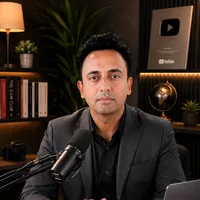
Jitendra Wadhwani
Global Entrepreneur · AI & Tech Expert · Digital Marketing & SEO · International Business Coach
Jitendra Wadhwani is an Indian businessman and global entrepreneur who leads HYRAX COMMUNICATION PVT LTD, a 15 years trusted company, and its ventures DND Teams, Viral In City and A Property Agency. He works as an AI and tech expert, digital marketing, social media and SEO expert, international business coach, trainer and YouTuber, serving clients and audiences across India, the USA, UK, UAE, Europe and worldwide. Everything he writes comes from hands-on work with real businesses, creators and learners.