Key takeaways
- Meditation is simple mental training: attention on the breath, returning when the mind wanders.
- Short daily sessions are more effective than occasional long ones.
- The pause meditation creates helps leaders respond rather than react.
- Techniques such as breath counting, body scans and box breathing suit beginners.
- Meditation complements, but does not replace, professional mental health care.
Why I meditate
Business today is noisy. Notifications, deadlines, client expectations, market changes and constant information compete for attention. Without a way to pause, it is easy to become reactive — answering everything, thinking deeply about nothing. Meditation is my way of stepping out of that noise, even briefly, and returning with a clearer mind.
I do not see meditation as something mystical or complicated. For me, it is simple mental training: sitting quietly, paying attention to the breath and gently bringing the mind back whenever it wanders. Like physical exercise, the benefits come from regular practice rather than occasional long sessions.
What meditation gives me
| Benefit | How it shows up at work |
|---|---|
| Calm | I respond to problems instead of reacting emotionally |
| Focus | I can stay with one task longer without distraction |
| Clarity | Priorities feel clearer and decisions less rushed |
| Self-awareness | I notice stress and fatigue earlier |
| Patience | Conversations with teams and clients become more thoughtful |
| Better sleep | A calmer mind settles more easily at night |
Responding, not reacting
The most valuable change I have noticed is a small pause before reacting. When an urgent problem appears, that pause lets me breathe, understand the situation and choose a better response. In leadership, that difference can protect relationships and prevent costly mistakes.
Focus in a distracted world
Deep work — strategy, writing, planning — needs sustained attention. Meditation trains the ability to notice distraction and return to the task. Over time, that ability grows stronger, just like a muscle.
My approach to practice
I keep my practice simple and flexible:
- Short daily sessions rather than long occasional ones.
- Breath awareness as the core technique.
- A consistent time, often in the morning before the day begins.
- Mini-pauses during the day — a few deep breaths before important calls or decisions.
- Evening reflection to let the day settle before sleep.
Simple techniques for beginners
- Breath counting. Sit comfortably, breathe naturally and count each exhale up to ten, then start again. When the mind wanders, return to one without judgement.
- Body scan. Slowly move attention from head to toe, noticing sensations and relaxing tension.
- Box breathing. Inhale for four counts, hold for four, exhale for four, hold for four. Repeat a few times to calm the nervous system.
- Mindful walking. Walk slowly, paying attention to each step and the feeling of movement.
- One-minute pause. Before a meeting, close your eyes and take five slow breaths.
A beginner's first week
| Day | Practice | Duration |
|---|---|---|
| 1 | Breath counting | 3 minutes |
| 2 | Breath counting | 4 minutes |
| 3 | Body scan | 5 minutes |
| 4 | Box breathing before work | 3 minutes |
| 5 | Breath counting | 5 minutes |
| 6 | Mindful walk | 10 minutes |
| 7 | Reflect on the week, choose a favourite technique | 5 minutes |
Common mistakes to avoid
- Expecting an empty mind. Thoughts will come; noticing them is the practice.
- Starting too long. Long sessions at the beginning often lead to frustration.
- Practising only when stressed. Regular practice builds resilience before stress arrives.
- Judging yourself. There is no perfect meditation session.
- Giving up too early. Benefits usually build gradually over weeks.
Meditation and leadership
Mindful leadership is not about being slow or passive. It is about being present. When I am present in a conversation, I listen better, ask better questions and understand people more deeply. Teams feel heard, clients feel understood, and decisions improve because they are based on clearer thinking rather than stress. Meditation also complements my physical routines — yoga, swimming and fitness — to support overall health.
Fitting meditation into a busy day
Even the busiest schedule has a few spare minutes: right after waking, before opening email, in a parked car before a meeting or just before sleep. Linking meditation to an existing habit — such as morning tea — makes it easier to remember. Guided audio can help in the beginning.
This page shares personal perspective. Meditation is not a substitute for professional mental health care; please seek qualified help if you are struggling.
Meditation and decision-making
Some of the most expensive mistakes in business are made in a hurry, under stress or in anger. Meditation helps me notice when I am in that state. Before an important decision, I sometimes take two or three minutes to breathe slowly and observe what I am feeling. Am I reacting to fear? To pressure from someone else? To ego? That brief check often changes the decision for the better. Clear decisions come from a settled mind, and a settled mind is something that can be trained.
Meditation also helps me hold uncertainty more comfortably. Entrepreneurship is full of unknowns. Instead of rushing to eliminate every uncertainty, I can acknowledge it calmly, gather the information I need and decide at the right time.
Mindfulness in everyday moments
Formal meditation is only one part of mindfulness. I try to bring the same attention to everyday activities: listening fully in conversations without checking my phone, eating meals without screens, walking without headphones occasionally and noticing my breath before speaking on camera. These small moments of presence add up and make the whole day feel calmer and more intentional.
Tracking progress gently
Progress in meditation is subtle. Rather than measuring minutes, I notice changes in daily life: Do I recover from irritation faster? Do I sleep more easily? Can I focus longer on demanding work? Writing a short note once a week about these changes helps me see the value of the practice, especially on days when sitting still feels difficult.
Frequently asked questions
How long should a beginner meditate?
Three to five minutes a day is a good start. Increase gradually as it becomes comfortable.
Do I need special equipment or a quiet room?
No. A chair or cushion and a few relatively quiet minutes are enough.
Can meditation help with work stress?
Many people find regular meditation helps them manage stress and respond more calmly, though it is not a replacement for professional support when needed.
What is the best time to meditate?
Any time you can practise consistently. Mornings work well for many people because the day has not yet become busy.
Is meditation religious?
Meditation has roots in many traditions, but simple breath-awareness techniques can be practised by anyone, regardless of belief.
What if I fall asleep while meditating?
It is common, especially when tired. Try sitting upright, meditating earlier in the day or keeping your eyes slightly open.
Should I use a meditation app?
Guided apps can help beginners build the habit and learn techniques. Over time, many people also enjoy practising without guidance.
Can I meditate at my desk?
Yes. Sit upright, close your eyes or soften your gaze and take a few minutes of slow, attentive breathing between tasks.
Final thought
Meditation does not remove challenges from business or life. It changes how we meet them — with more calm, clarity and kindness. A few minutes a day is a small investment with a remarkable return.
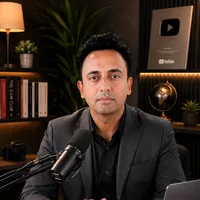
Jitendra Wadhwani
Global Entrepreneur · AI & Tech Expert · Digital Marketing & SEO · International Business Coach
Jitendra Wadhwani is an Indian businessman and global entrepreneur who leads HYRAX COMMUNICATION PVT LTD, a 15 years trusted company, and its ventures DND Teams, Viral In City and A Property Agency. He works as an AI and tech expert, digital marketing, social media and SEO expert, international business coach, trainer and YouTuber, serving clients and audiences across India, the USA, UK, UAE, Europe and worldwide. Everything he writes comes from hands-on work with real businesses, creators and learners.